Ingredients
Method
- Preheat the oven to 180°C (160°C fan). Grease a 9x13 inch baking dish with butter or a light spray of oil. You want the sides and bottom well coated — the sponge will stick if you skip this.
- Whisk the dry ingredients together. In a small bowl, combine the flour, baking powder, and salt. The mixture should look uniform and pale, with no clumps. Set it aside for now.
- Beat the egg whites until stiff peaks form. In a large, clean bowl, use a hand mixer to whip the egg whites on medium-high speed. You’ll see them go from frothy and yellow-white to glossy and snow-white. When you lift the beaters, the peaks should stand upright without drooping — that’s your cue to stop. Set this bowl aside.
- Cream the yolks and sugar. In another large bowl, beat the egg yolks with the caster sugar until the mixture turns thick, pale, and ribbon-like. When you lift the beaters, the batter should fall back into the bowl in a slow, smooth ribbon that holds its shape for a second. This takes about 3 minutes of beating.
- Fold the wet ingredients into the yolk mixture. Stir in the 120ml whole milk and 1 teaspoon vanilla extract until just combined. The batter will look thin and slightly curdled — that’s normal.
- Fold in the dry ingredients and egg whites. Gently fold the flour mixture into the yolk mixture in three additions, alternating with the egg whites. Use a rubber spatula and a light hand — cut through the centre, scrape the bottom, and lift the mixture over itself. Stop as soon as you can’t see any white streaks. The batter should be fluffy, airy, and pale yellow with a soft, mousse-like texture.
- Bake the sponge. Pour the batter into the prepared baking dish and spread it evenly. The batter will be thick and billowy. Bake for 30–35 minutes, until the top is golden brown and springs back when gently pressed. A skewer inserted into the centre should come out clean or with a few dry crumbs. The kitchen will smell sweet and eggy — a good sign.
- Cool the sponge completely. Place the dish on a wire cooling rack and let the cake cool for at least 30 minutes. You’ll know it’s ready when the top feels cool to the touch and the sides have pulled away slightly from the dish. This step is essential — a warm sponge will absorb the milk unevenly and turn soggy.
- Make the three-milk mixture. In a large jug, whisk together the evaporated milk, sweetened condensed milk, and 300ml double cream. The mixture should be smooth, pale, and slightly thickened — almost like a thin milkshake. Taste it — it should be sweet but not cloying.
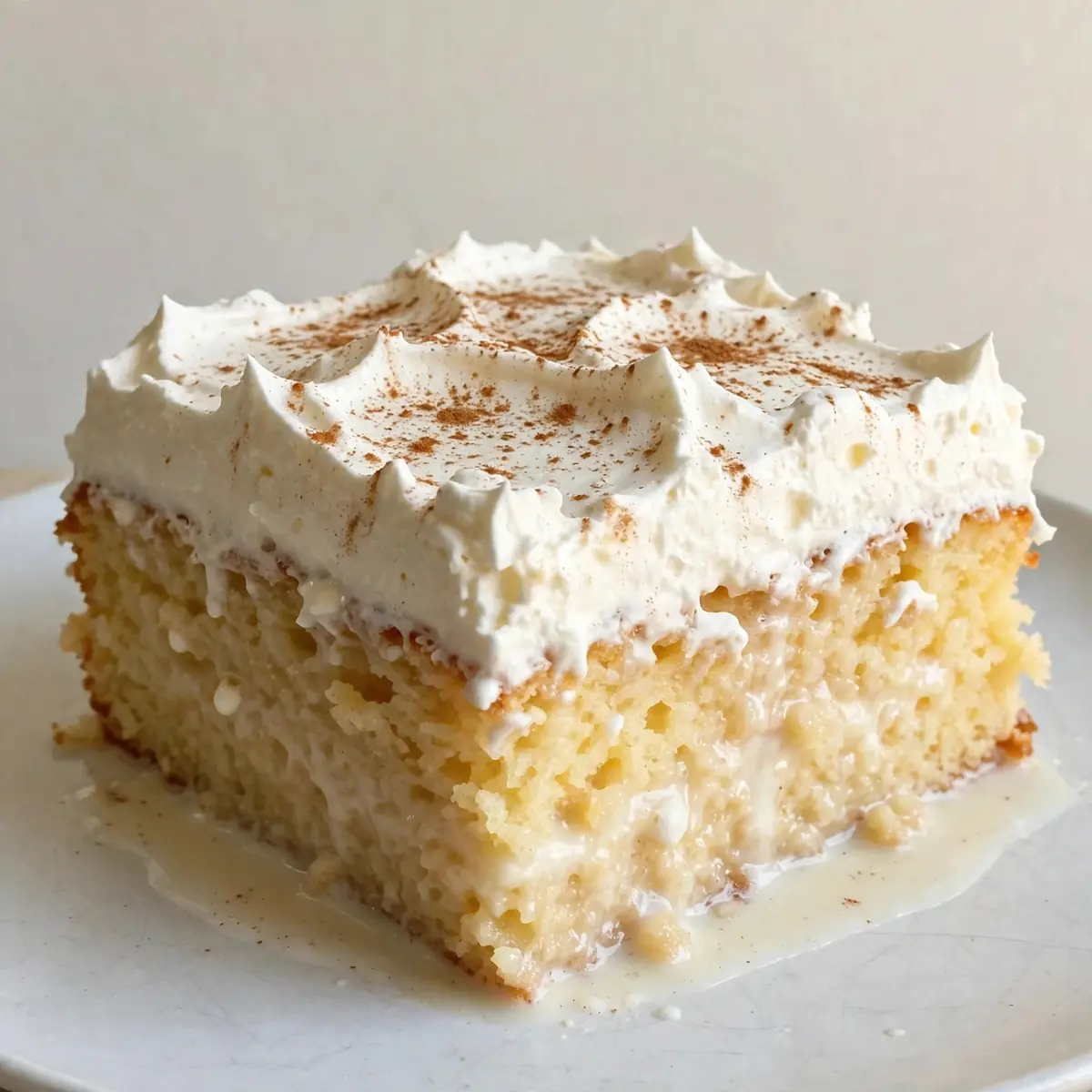
- Soak the cake. Using a fork or skewer, poke holes all over the surface of the cooled sponge — about 30 to 40 holes. Pour the milk mixture slowly and evenly over the cake, starting at the edges and working toward the centre. You’ll see the sponge darken and puff slightly as it drinks up the liquid. Cover the dish with cling film and refrigerate for at least 2 hours, though overnight is ideal.
- Whip the topping and serve. Just before serving, pour 500ml double cream into a chilled bowl with the icing sugar and 1 teaspoon vanilla extract. Whip on medium-high speed until soft peaks form — the cream should hold its shape when you lift the beaters but still look silky, not stiff. Spread the whipped cream over the chilled cake in an even layer. Slice and serve cold.
Notes
For best results, soak the cake overnight to allow the milk mixture to fully absorb. Use a metal or glass baking dish for even cooling. The sponge must be completely cool before adding the milk mixture to avoid a soggy texture.