Ingredients
Method
- Preheat the oven to 210°C (fan 190°C). Place a baking tray on the middle shelf to heat up. This helps the bottom of the cheesecake cook evenly. You should hear the tray ping as it expands.
- Prepare the tin. Tear off two large sheets of parchment paper, each about 40cm long. Crumple them up under the tap, shake off the excess water, then smooth them out. Line a 20cm round springform tin, pressing the paper into the corners. The paper should come at least 5cm above the rim. Butter the inside of the tin first to help the paper stick.
- Beat the cream cheese. In a large mixing bowl, beat the cream cheese with an electric mixer on medium speed for 2 minutes until it’s smooth, pale, and looks like thick Greek yoghurt. Scrape down the sides of the bowl with a rubber spatula.
- Add the sugar. Pour in the caster sugar and beat on medium speed for another 2 minutes. The mixture will become glossy and slightly grainy to the touch. You should see the sugar crystals disappear into the cream cheese.
- Add the eggs one at a time. Crack the first egg into a small bowl to avoid shell bits, then add it to the mixture. Beat on low until just combined — about 15 seconds. Repeat with the remaining three eggs. The batter will look a little looser and silky.
- Add the cream, vanilla, and salt. Pour in the double cream and vanilla extract. Sprinkle over the salt and lemon zest if using. Beat on low for 30 seconds until everything comes together. The batter should be smooth, pourable, and the colour of pale honey. If you see any streaks, give it a quick stir with the spatula.
- Sift in the flour. Sift the flour over the batter. Fold it in gently with a spatula until no white streaks remain. Do not overmix — you want a uniform batter, not a stiff one. The mixture will thicken slightly.
- Pour into the tin. Pour the batter straight into the lined tin. Give the tin a gentle tap on the counter to release any air bubbles. The batter should come about three-quarters of the way up the tin.
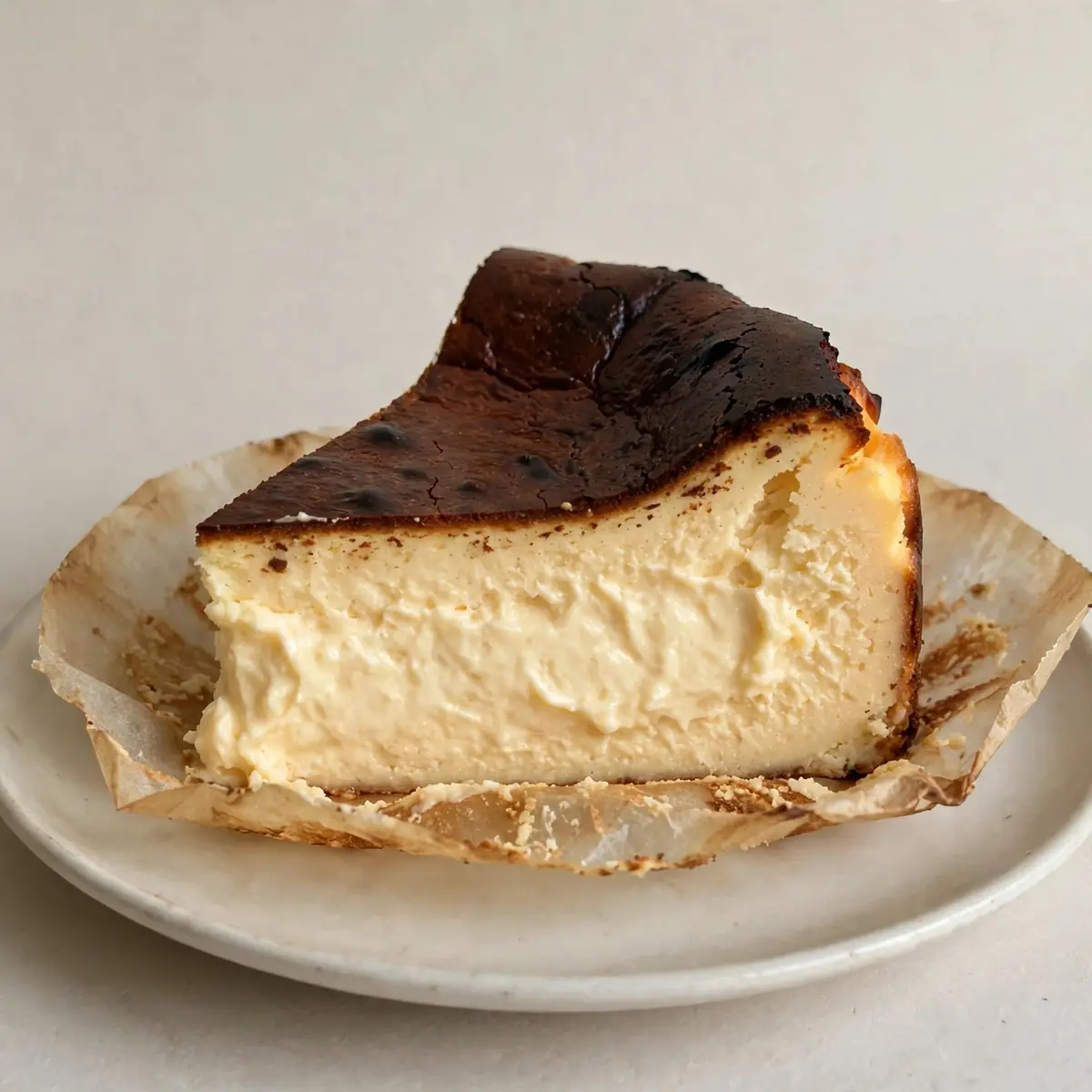
- Bake for 50–55 minutes. Place the tin on the hot baking tray. Bake for 50 minutes. At the 45-minute mark, check the colour. The top should be a deep, dark brown — almost black in places — and the centre should jiggle like a panna cotta when you gently shake the tin. The edges will look set and slightly puffed. If the top is still pale after 45 minutes, increase the oven temperature to 220°C (fan 200°C) for the final 5–10 minutes.
- Cool completely. Remove the cheesecake from the oven. It will look alarmingly dark and wobbly — this is exactly right. Let it cool in the tin on a wire rack for 1 hour. The top will sink slightly and crack. After an hour, transfer the tin to the fridge and chill for at least 2 hours, or overnight. The texture will firm up beautifully.
Notes
For best texture, chill overnight. The cheesecake will deflate and crack as it cools — this is normal and desirable. Use room temperature ingredients for a smooth batter. Lemon zest is optional but adds a bright note.