Ingredients
Method
- Preheat and prepare your tins: Set your oven to 180°C (160°C fan). Grease two 20cm round cake tins with a little butter or oil, then line the bottoms with a circle of baking parchment. The paper should sit flat, without wrinkles, so your cakes release cleanly later.
- Whisk the dry ingredients: In a large mixing bowl, combine the flour, sugar, baking powder, bicarbonate of soda, and salt. Whisk them together for about 30 seconds — you’ll see the mixture lighten slightly and smell the faint sweetness of the sugar. This aerates the flour and distributes the raising agents evenly.
- Add the wet ingredients: Make a well in the centre of the dry mixture. Pour in the oil, eggs, buttermilk, and vanilla extract. Whisk gently at first, then increase speed until the batter is smooth and glossy. You’ll notice it thicken as the buttermilk reacts with the bicarbonate of soda — tiny bubbles will appear on the surface, which means your cake will rise beautifully.
- Stir in the boiling water: Pour the boiling water into the batter and whisk on low speed until just combined. The batter will become very thin and runny, almost like a pancake batter, but don’t panic — this extra liquid is what gives the cake its signature fluffy texture. The aroma of vanilla will fill your kitchen.
- Divide and bake: Pour the batter evenly between the two prepared tins. Tap each tin gently on the counter to release any large air bubbles — you’ll see a few rise to the surface. Bake for 25–30 minutes, or until a skewer inserted into the centre comes out clean with just a few moist crumbs attached. The tops should be golden brown and spring back when pressed lightly.
- Cool completely: Leave the cakes in their tins on a wire rack for 10 minutes. Run a knife around the edges to loosen them, then turn them out onto the rack. Peel off the parchment and let them cool completely — at least 1 hour. The cakes should feel firm but tender when you touch them, and the crumb will be pale and airy.
- Make the frosting (if using): Beat the softened butter in a bowl until pale and creamy, about 2 minutes. Gradually add the sifted icing sugar, beating on low speed until combined. Add the double cream and vanilla, then increase speed to high and beat for 3–4 minutes until light and fluffy. The frosting should be thick enough to hold its shape but soft enough to spread easily.
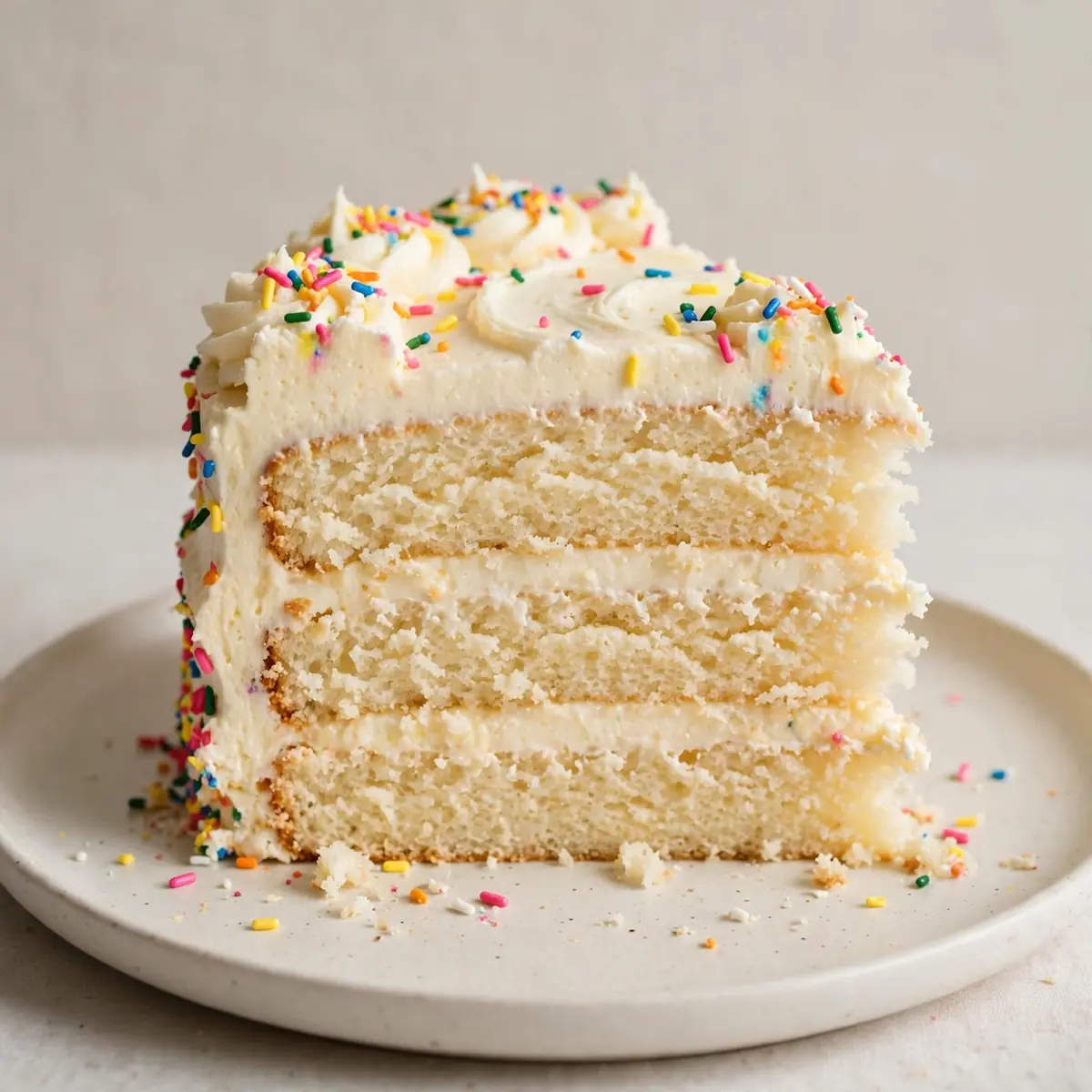
- Assemble the cake: Place one cooled layer on a serving plate. Spread a generous layer of frosting on top, then place the second layer upside down (flat side up) on top. Frost the top and sides, swirling the frosting for a rustic finish. Sprinkle with colourful sprinkles or leave plain — either way, it looks like a proper birthday cake.
Notes
If not using frosting, the cake can be served plain or dusted with icing sugar. Buttermilk can be substituted with 240ml whole milk mixed with 1 tablespoon lemon juice, left to stand for 5 minutes.