Ingredients
Method
- Prepare the crust. Place the whole Oreos in a food processor and blitz until they form fine, dark crumbs that look like damp sand. Pour in the melted butter and pulse until the mixture clumps together when pressed between your fingers. Tip the crumbs into a 23cm springform tin lined with parchment paper. Press firmly into the base and about 2cm up the sides using the flat bottom of a glass. The crust should feel compact and solid, with a dark, even colour. Place the tin in the freezer for 10 minutes while you make the filling.
- Preheat the oven. Set your oven to 160°C (140°C fan). Place a large baking tray filled with 1cm of hot water on the bottom shelf. This steam helps the cheesecake bake gently and prevents the top from cracking.
- Beat the cream cheese. In a large mixing bowl, beat the cream cheese with an electric mixer on medium speed until it's smooth and silky, about 2 minutes. You'll see it soften and lighten in colour, with no lumps remaining. Scrape down the sides and the beaters thoroughly.
- Add sugar and vanilla. Add the caster sugar and vanilla extract, then beat on low speed just until combined. The mixture should look glossy and smooth. Overbeating at this stage incorporates too much air, which can cause cracks later.
- Add eggs one at a time. Crack the first egg into the bowl and beat on low until the yellow streak disappears. The mixture will look slightly looser. Repeat with the remaining eggs, scraping the bowl after each addition. You should hear a soft, wet sound as the mixer runs, and the batter will be thick, creamy, and pale ivory in colour.
- Fold in cream and flour. Pour in the double cream and sift the plain flour and salt over the top. Use a spatula to fold gently, scraping from the bottom up, until no white streaks of flour remain. The batter should be velvety and pourable, with a smooth, uniform texture.
- Bake the cheesecake. Remove the crust from the freezer. Pour the filling into the chilled crust and smooth the top with a spatula. The surface should be level and glossy. Place the tin on the middle oven rack and bake for 50–55 minutes. The edges will look set and slightly puffed, but the centre should jiggle like a wobbling jelly when you gently shake the tin. The top will be a pale golden colour, and a faint, sweet vanilla aroma will fill your kitchen.
- Cool slowly. Turn off the oven, crack the door open, and leave the cheesecake inside for 1 hour. This gentle cooling prevents the top from sinking. After an hour, transfer the tin to a wire rack and let it cool completely at room temperature, about 2 hours. The surface will feel firm to the touch, and the sides will have pulled slightly away from the tin.
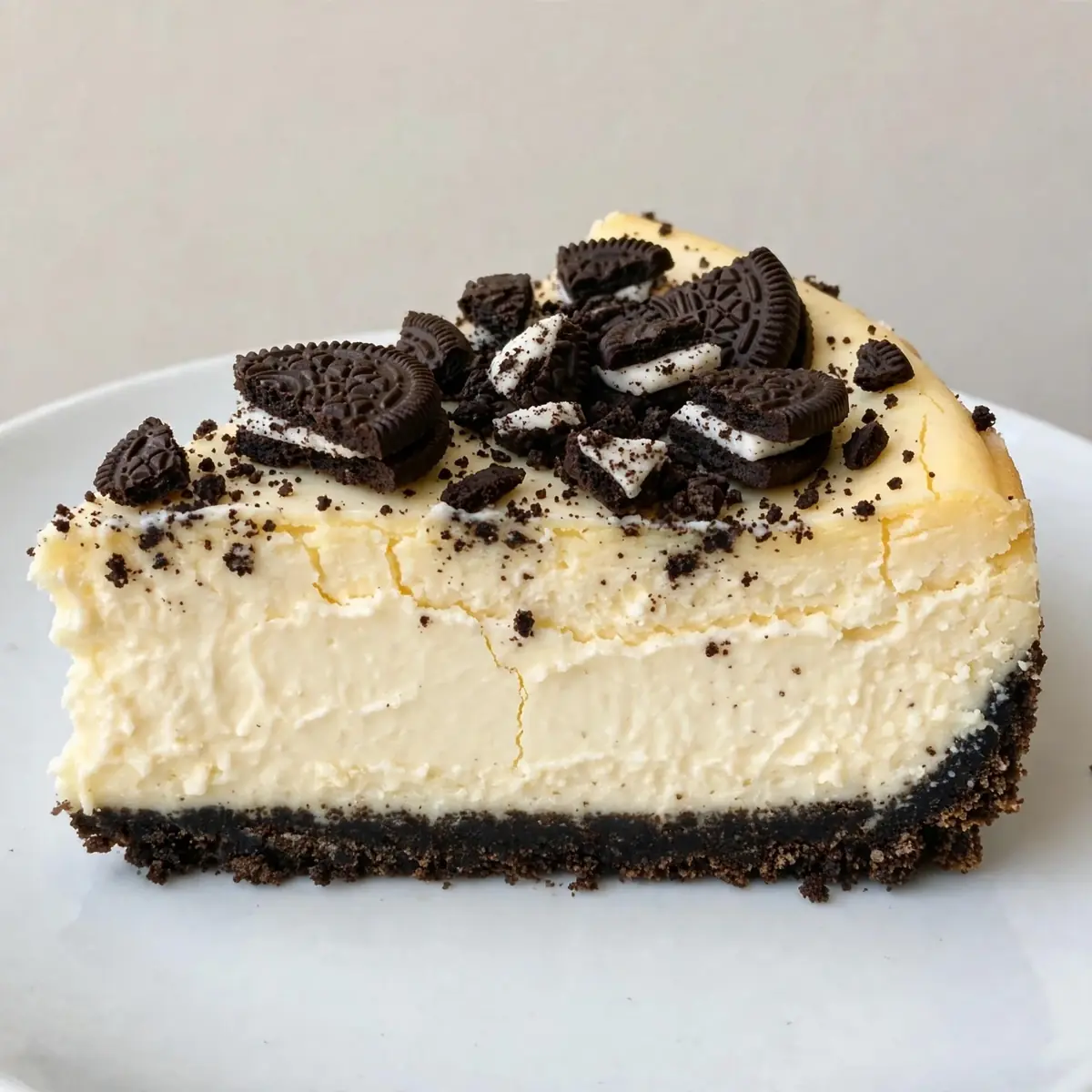
- Chill overnight. Cover the tin with foil and refrigerate for at least 4 hours, but overnight is best. The cheesecake will become dense, creamy, and sliceable. When you cut into it, the texture should be smooth and velvety, with no cracks or graininess.
Notes
For best results, use full-fat cream cheese at room temperature and chill the cheesecake overnight. The water bath steam helps prevent cracks. Store leftovers in the refrigerator for up to 5 days.